Tuesday, February 14, 2006

New Orlean benefit photographic exhibition.


New Orleans Our Hometown, Inc. (NOOHT) a non-profit corporation, will host an international benefit photographic exhibition. Donated entries will be accepted now through March 3, 2006.


All entries to "New Orleans Our Hometown: Photographs from a World of Admirers" will be reproduced and made available for purchase with 100% of net profits donated to A Studio in the Woods, New Orleans, Louisiana to fund artist in residency programs for artists displaced by Hurricane Katrina.


All submitted entries will be displayed at LeMieux Galleries, New Orleans, Louisiana throughout 2006.


"New Orleans Our Hometown: Photographs from a World of Admirers," has been created as the exhibition theme in the aftermath of Hurricane Katrina to serve as a memorial and a testimonial to what has been lost and forever altered. The exhibition seeks to create a dialogue focusing on the city of New Orleans, a city of unique qualities and character that holds a place of honor in the hearts and minds of the world

For information on how to submitt work- please go to thier website at: http://www.nooht.org/web/

Monday, February 13, 2006

ARTISTS REFLECT ON THE DEATH PENALTY.

Justice For All?

The death penalty has come under intense criticism of late. Innocent people have been released from death row after years of wrongful incarceration. Other innocents, such as Ruben Cantu in Texas, may have been wrongfully executed. Calls have been made to stop all executions and investigate the system or to abolish it once and for all.

We are organizing this international, all-media, juried art show to foster the creation of new artwork on the death penalty, to celebrate artwork that may already have been created and to encourage and enhance civic engagement and dialogue about the death penalty.

Democracy is animated when an informed public is engaged in the issues of the day. We hope this art show will reach new and diverse participants and audiences and will stimulate public dialogue about this contemporary social issue and inspire action to make change. Art is a wonderful medium for the transformation and awareness of the world.

We welcome submissions from artists who engage the issue from all sides.
Deadline for Submissions: March 20, 2006. Exhibition: May 6-22, 2006 in Austin, Texas


THE DEATH PENALTY ART SHOW IS SPONSORED BY AND COPYRIGHT © 2006 TEXAS MORATORIUM NETWORK.
More info at:
http://www.deathpenaltyartshow.org/index.html

Sunday, February 12, 2006

Scott Covert - More than just rubbing grave stones


Scott Covert started exhibiting his artwork in 1979 at Club 57 in New York at a show curated by the now deceased famous New York artist Keith Haring. I find this element of Scotts Bibliography curiously apropos with the work he’s involved with now being his “Grave Rubbings”. Working on large canvas sheets Scott starts out doing single rubbings, but the work quickly evolved into what he thinks of as cocktail parties for the dead (more or less), in which he puts together the guest list. As with any good party, the original list often gets blurred, with names added and deleted on the spur of the moment. In Scott’s work, one person sometimes gets layered over another, reflecting not only the randomness of life and death, but of memory and history. Lives get covered over, perhaps forgotten.


They are portraits, in a sense, and they reveal the intensely personal connection Scott makes with his “subjects” while on his knees, on their graves, rubbing away and meditating on their lives. Certainly, there is a Dr. Frankenstein element here as well, almost a sense of re-animation through the hand of the artist, and in the combinations of different elements with the various personalities.

Scott Covert is being shown right now in Illinoios at at Plan B Gallery, 7453 W. Madison; Forest park Illinois.

His web site is at:
http://www.enthrive.com/covert/pages/info.html

Saturday, February 11, 2006

Insights from St. Louis Artist Matt Stacey


What is the first thing you do when you begin your `create’ mode?

I am a Photographer based in St. Louis and when I
begin a new project I try to compile old works and
think about how I might try to go into a new
direction, or expand further on something that I have
already created. The thing about the created juices
is that sometimes they are not fully realized in the
first go around. Revisiting old works may allow an
artist to expand the idea in a new direction. I
sometimes think about my own arrogance in thinking
that Ive ever actually "completed" a piece.

Matt Stacey
stause2000@yahoo.com

Visit his blog at
http://talkingphotos.blogspot.com/

Bloggers take a closer look at Borf's Judge


It Turns Out That Borf's Sentencing Judge Is Dating A Rich White Guy!
D.C. Superior Court Judge Lynne Leibovitch photographed in Aruba on vacation with her AOL Vice President boyfriend after Borf's sentencing.
---
Judge Lynne Leibovitch is only too happy to cut her vacation short to serve the interests of justice by placing teenage artists inside one of the most brutal and inhuman of jails in the United States of America.

Picture and comments found at the blog:
Black Cat Bone - Burning The Flesh Off Modern Art
by
James W. Bailey C.S.A. (Contemporary Southern Artist)Born and Raised in the Great State of Mississippi. Born-again in the City of New Orleans.
http://blackcatbone.blogspot.com/2006/02/it-turns-out-that-borfs-sentencing.html

There is more interesting documentation on this judge at this site.

Borf Busted

Quickly making a buzz in the art world is the arrest and sentencing of an 18 year old Graffiti Artist in Washington DC.


By Henri E. Cauvin
Washington Post Staff Writer
Friday, February 10, 2006; Page B09

The teenage graffiti vandal known as Borf got tagged yesterday -- with 30 days in the D.C. jail and a dressing-down that no one in the courtroom will soon forget.

Borf, aka John Tsombikos, chose not to address the judge who was deciding his fate. But D.C. Superior Court Judge Lynn Leibovitz had a lot to say to the young anarchist from Northern Virginia. She didn't paint a pretty picture.

"You profess to despise rich people," she said. "You profess to despise the faceless, nameless forms of government that oppress. That's what you've become. That's what you are. You're a rich kid who comes into Washington and defaces property because you feel like it. It's not fair. It's not right."

Prolific like few local taggers before him, the 18-year-old Tsombikos left the Borf mark at dozens of places all over the District, from daring, eye-catching expositions such as the tagging of a wall above a Cosi on Connecticut Avenue to cruder, less memorable efforts such as the spray-painting of a dumpster on a side street.

The moniker, prosecutors said, was the nickname of a friend who killed himself in October 2003 in Silver Spring, and references in court to a confidential pre-sentence report on Tsombikos suggested that he has been deeply troubled by his friend's death.


Whatever the inspiration, the tag seemed to be everywhere for a time, to the frustration of property owners, police and city workers responsible for cleaning up graffiti. The judge said there was no justification for it.

"That's not artistic expression," she said. "That is not political expression. That is not grief therapy. That is vandalism."

Caught early one morning last summer as he defaced a Howard University building, Tsombikos was charged with destruction of property. The arrest and subsequent media attention seemed to heighten his notoriety. Copycats emerged, eager to fill the breach.

In December, he pleaded guilty to the felony charge. Yesterday, the prosecutor, Assistant U.S. Attorney Cynthia Wright, urged the judge to lock him up. It was an unusual request for a first-time offender in a property crime.

But the judge did not need much convincing. What mattered to Leibovitz -- and what Tsombikos seemed not to understand -- was that ordinary people had been affected by the mess he created.

"It's not about whether you want to express yourself," she said. "Washington, D.C., is not a playground that was built for your self-expression. It's a place where people, real people, live and care about their communities."

Nothing that took place in the months before he pleaded guilty in December and nothing that has happened since seems to have awakened him to that fact, she said.

He showed up for one hearing last fall wearing paint-splattered clothing. And while his case was still pending in the District, Tsombikos got in more trouble. He was arrested on the Upper East Side of Manhattan on suspicion of defacing a streetlight box, ruining his chances of probation.

"You should have been walking out of the front door of this courtroom today," Leibovitz told him. "Unfortunately, I have come to the conclusion that you require more than that to impress upon you the seriousness of what you've done. Not because it's a wall, not because it's a building, not because it's a fixture in some abstract sense. But because of people."

Standing next to his attorney, Michael Madden, Tsombikos stood in silence as the judge spoke. His father watched from among a courtroom full of spectators.

The 30-day jail term is just the start. If Tsombikos breaks the law again within the next three years, he could be jailed for the 17 suspended months of his sentence. Regardless, he has to complete 200 hours of community service, including 80 hours of cleaning up graffiti. And he must pay $12,000 in restitution, money that better not come out of his parents' bank accounts, the judge said.

"In other words," she said, "not the bogus jobs that your father gives you in New York . . . a real job, going to work like the people you demean, earning it with paychecks and the sweat of your own brow."

But it was the prospect of a month at the jail that most worried Madden, who had asked for probation and pleaded with the judge to at least send Tsombikos to a halfway house.

She wouldn't budge, and she made it clear why.

"I want him to see what the inside of the D.C. jail looks like," she said, "because unlike every other person you've seen in my courtroom this morning, who have a ninth-grade education, who are drug-addicted, who have had childhoods the likes of which you could not conceive, you come from privilege and opportunity and seem to think that the whole world is just like McLean and just like East 68th Street.

"Well," she said, "it's not."


Article found on Washington Post.com

Nineteen Penises

EXHIBITION
February 2006 Web Gallery:

Nineteen Penises
curated by David Humphrey

Every month, Visual AIDS invites guest curators, drawn from both the arts and AIDS communities, to select several works from the Frank Moore Archive Project. For February, David Humphrey curated the current on-line exhibition which features the artwork of Archive Members: David B. Abbott, Michael Berube, Raynes Birkbeck, Michael Harwood, Jerry Hooten, Gregory Maskwa, Tim McCarron, Michael Mitchell, John Morrison, Berni Ortiz, Alfred Santiago, Rene Santos, Tom Shooter, and Richard Treitner.

from the Curator's Statement:
The names spread across many cultures: Wang, Dong, Schlong, Dick, Peter, Willie, Johnson or Rod. Some names have punch, like Schmuck, Prick, Pecker and Cock. Others bust out with spicy associations, like Wiener Schnitzel, Pink Torpedo, Bald Monkey or Weeping Jesus. We will never finish the task of renaming the penis, because we can never finish the task of understanding it.

From the possessor's point of view the penis is a double agent, both one's own and separate, private and public, a tool and independent agent. It can be a source of embarrassment or pride, vulnerability or power. A penis is the little part that preoccupies; its incessant reproportioning attracts disproportionate attention. It is a shape-shifting troublemaker.

Artists and non-artists alike have been depicting the penis for much of recorded time, in spite of the confusing and sometimes ferocious prohibition against its representation. This selection of artworks from the Frank Moore archive charts a circuitous itinerary through the vast continent of penis. Some of the members included here have been fashioned by hand, others are documented photographically, and all were emphatically made to be looked at. Whether the artist’s purpose was to arouse, protest, explain or provoke, each work testifies to an irrepressible desire to look at what we've been told over and over should not be seen in public.

See the exhibit at : http://www.thebody.com/visualaids/web_gallery/2006/humphrey/01.html

Friday, February 10, 2006

Open call for Art piece that portrays the sensation of an orgasm

Open Call of Submissions for Orgasmos -- to create and submit a Net or Web Art piece that portrays the sensation of an orgasm. 10 works only will be selected by our international panel, to be showcased online on tosoma.org from April 10th 2006.

Tosoma.org is a website specializing in creating and showcasing online based public art projects, overseen by a panel of 25 established and emerging international professionals from a wide range of new media fields.
Submission Guidelines: Net.Art/Web.Art Submissions: please send the URL of your piece and any specific viewing requirements in terms of browsers and software.

In your email please include the name of the piece and a short statement of who you or your group/collaborative are (300 words max). Also include your main website if you have one and your email address (please state if you wish your website and email address to be visible on the site)

Email all work to submit@tosoma.org

Important: When submitting work you will need to give your consent and confirm it is your own work in order for us to use it. If you are sending via email, you must copy and paste in your email the following paragraph, signed by yourself. If you are posting the material please copy paste this on you cover letter and sign it:

"The work I am submitting is my own, I have consent from all ollaborators involved (ifany), to use and submit this work. I allow http://www.tosoma.org to display my work within the tosoma website. I will not contact panel members discussing my submission."

Wednesday, February 08, 2006

Insights from Artist

"What is the first thing you do when you begin your `create' mode?"


Jeffrey Scott Holland from Louisville, KY answered:

For me the painting process usually consists of much pacing around naked and listening to the same CD on repeat, over and over and over (Psychedelic Furs, Hasil Adkins, Cat Power) for at least 1-2 hours before I even uncap a paint tube. I'm not actually thinking much about the painting during this time, I'm just getting myself into that trance-like "painting state". Once the moment arrives, I'm done pacing and work on the piece (usually standing) in a frenzy until it's completed, regardless of how long that takes. I rarely take more than 24 hours on any given piece, wall-size murals being the only exception.

I do a performance series called Dark Observatory where I turn a gallery or other venue into a temporary studio, and work on paintings in front of a live audience. (I keep my clothes on for those, but I do blast the Hasil Adkins CD at full volume.)

You can check out his cool website - read about his art projects and see some of his work here:

http://www.jeffreyscottholland.com/

Sample of his work on his website.

Tuesday, February 07, 2006

What does volunteerism look like?

Poster Contest comming to an end- still a couple days to vote.

We need people to vote on an online poster contest
(of course it’s free to vote)

Link on bottom of page – thanks for voting –it’s a good cause.

The poster contest if part of the International Youth Volunteerism Summit
WHERE: Northwestern University
WHEN: February 24-26

The inaugural IYVSummit is a weekend designed to celebrate the impulses behind youth volunteerism around the world while at the same time creating a social and intellectual space for serious critical discussion of the limits and pitfalls of those impulses.

THE ONLY INSTRUCTIONS GIVEN TO ARTIST WAS : What does volunteerism look like? Put it on a poster. Any size, any medium, any form.

( When asked (by email) they said it was not to be a poster for the conference –I asked, but unfortunately others did not.)

My own submission to the contest doesn’t appear so well on their site, It wasn’t designed to be so compressed – and the text doesn’t come out clearly. The whimsical people images in each square explain how they volunteer – from babysitting, to work in a forest preserve, to helping NASA, Big Brothers/ Big Sisters and other organizations. The goal was to show that Volunteering encompasses a large spectrum of activities (as well as emotions.).

You can double click on the images to get a larger view

Thanks - Paul Grant (follower of Basho)

TO VOTE PLEASE GO TO: http://www.iyvs.org/poster/contest/

Sorry isn't enough

Vase-Smasher Banned

- The Independent reports that a visitor to the Fitzwilliam Museum in Cambridge who accidentally smashed £100,000 ($174,820) worth of Chinese vases says that he has been banned from returning. "It was just a regrettable accident. I snagged my shoelace, missed the step and crash, bang, wallop there were a million pieces of high quality Chang ceramics lying around underneath me," he told BBC Radio 4's Today program.

Sunday, February 05, 2006

Put his memory on your feet

Reebok Basquiat Sneakers

I saw these on The Stylephile and decided they were a must-have for my favorite artist who has a birthday coming up. Reebok has made a new collection of sneakers that are designed based on the unique designs of Jean-Michel Basquiat. Basquiat, whose works were recently shown in a comprehensive retrospective at the MOCA here in Los Angeles, was famous for his graffiti-inspired art. The sneakers have Basquiat's name on back, his signature crown and a Basqiuat design on the sole. The sneakers come in just a few colors and are made in limited runs of 500. The Stylephile says you can get them at%uFFFD Sportie L.A. or Barneys for $140 but I found my pair for $120 at Karmaloop.

Thursday, January 26, 2006

Judging Kieth Haring in 2006

"Uplifting and Joyful" Haring Called Obscene

Keith_haringA commissioner in Berks County, Pennsylvania, where Keith Haring is from, is calling the artist's work "obscene" and refusing a museum's request to hang a Statue of Liberty mural.

The 30'x90' mural, which once hung from a building in New York City, was nixed after the commissioner, Mark C. Scott, looked at Haring's work on the internet and determined that it depicted "graphic sadomasochistic and homosexual activities."

Supporters of Haring contend that Scott's decision was politically motivated.

Said Jill Katz of the Institute of Contemporary Art in Philly: "His drawings look very simplistic, almost primal in a way. But they all told a story. He was very much about depicting the world around him. He became one of the greatest artists of his time. He has a large body of work that is not categorized as obscene. The sexuality that comes through in his work is just one facet of his personality. It’s not all of him. It’s what some people dwell on because they find it offensive in some way. He didn’t do this for the shock value. He was drawing from his experiences."

Haring grew up in nearby Kutztown, PA. He raised thousands for children's charities in his lifetime. He died of AIDS in 1990, at age 31.


Friday, January 20, 2006

Gilbert and George's Sonofagod Pictures:

Artists arouse MP's fury

Charlotte Higgins, arts correspondent for The Guardian reports on the
new work by artist Gilbert and George.

To the left is part of Gilbert and George's Sonofagod Pictures: Was Jesus Heterosexual? series of works at the White Cube Gallery.

Gilbert and George are the finest dressed, and quite possibly most courteous, artists in London. But their new series of works is anything but polite.

Even before going on display today at London's White Cube gallery, the 21 new artworks - collectively titled Sonofagod Pictures: Was Jesus Heterosexual? - have aroused the fury of the Tory MP Ann Widdecombe, who has called them "blasphemous in the extreme, as [Gilbert and George] will find out when finally they stand before the Son of God". But the Bishop of Stepney, according to George, has been "very polite and very nice, and requested a studio visit".

For Sonofagod Pictures the artists have used the symbols and signs of belief systems; from lucky horseshoes and charms to crosses and stars of David.

Despite the confrontational images and the accompanying texts (such as "Jesus says forgive yourself/God loves fucking! Enjoy"), the artists say that the works are not offensive. Gilbert: "Christians are abusive to humans - to women, to queers. They threaten us with hell." George: "That's offensive, not us."

____________________________________________________________________
Read an interview from a few years back with dynamic team of the British art scene - HERE

Koons- copying another artist work -again


Koons Wins Fair Use Trial

01.20.06 - ARTNET reports that Jeff Koons has won a legal dispute over the usage of a fashion photo in his piece Niagara, 2000.

The neo-Pop artist, who famously appealed his 1988 String of Puppies copyright-infringement case all the way to the Supreme Court (See below for summery of this landmark case)—and lost—has been dragged into court once again for copying another artist's work.

For a seven-painting commission for the Deutsche Guggenheim Berlin, Koons drew on part of a photograph taken by Andrea Blanch titled Silk Sandals by Gucci and published in Allure magazine.

In his decision, judge Louis L. Stanton of US District Court found that Niagara was indeed a "transformative use" of Blanch's photograph. Blanch, a twenty-year veteran of the photo world, has filed to appeal the ruling.

Jeff Koons Vitals:

Jeff Koons AKA Jeffrey Koons

Born: 21-Jan-1955
Birthplace: York, PA

Gender: Male
Ethnicity: White
Sexual orientation: Straight
Occupation: Sculptor, Painter

Nationality: United States
Executive summary: Artistic hack, Cicciolina's ex-husband

Father: Henry (interior decorator)
Mother: (homemaker)
Wife: Cicciolina (m. 1991, div. 1992)
Son: Ludwig Maximilian Koons (b. 1992)

University: Maryland Institute College of Art
University: Art Institute of Chicago

French Legion of Honor

****


Art Rogers
Photograph (1980)

Jeff Koons
String of Puppies (1988)
Wood painted sculpture

The String of Puppies Case

Rogers v. Koons, 960 F.2d 301 (2d Cir. 1992), is a leading U.S. court case on copyright, dealing with the fair use defense for parody. The Court found that an artist copying a photo could not be protected when there was no clear need to imitate the photo for parody.

Background:

Art Rogers is a professional photographer who took a black and white photo of a man and a woman with their arms full of puppies. The photograph was simply entitled "Puppies" and was used on greeting cards and other generic merchandise.

Jeff Koons, a famous artist, found the picture on a postcard and wanted to make a sculpture based on the picture for an art show on the theme of banality of everyday items. After removing the copyright label from the post card, he gave the picture to his assistants with instructions on how to model the sculpture. He asked that as much detail be copied as possible, though the puppies were to be made blue, their noses exaggerated, and flowers to be added to the hair of the man and woman.

The sculpture, entitled "String of Puppies," became a success, and Koon sold three of them for $367,000.

Upon discovering that his picture had been copied, Rogers sued Koons and the Sonnabend Gallery for copyright infringement. Koons admitted to having intentionally copied the image but attempted to claim fair use by parody.

Opinion of the Court

The Court found both "substantial similarity" and that there was access to the picture. The similarity was so close that the average lay person would recognize the copying. Thus the sculpture was found to infringe Rogers' copyright.

On the issue of fair use, the court rejected the parody argument, as Koons could have expressed the parody of the puppies without directly copying Rogers' "Puppies" photo. Koons' work was not commenting directly on the work itself, but rather on a general idea, so there was no need to copy.


keywords: Jeff Koons Niagara, 2000. neo-Pop artist, 1988 String of Puppies, copyright-infringement Deutsche Guggenheim Berlin, Andrea Blanch, Silk Sandals by Gucci,

Thursday, January 19, 2006

Follow Up : on Nazi Stolen Klimt paintings

Maria Altman, who was recently awarded ownership of five Gustav Klimt paintings that had been stolen from her family by the Nazis, has offered to sell some of them back to the Austrian government.

This is a followup to an earlier post found at:

http://thebluerider.blogspot.com/2006/01/klimt-paintings-that-nazis-stole.html


Keywords: Klimt, Nazi, Altman, stolen art

Wednesday, January 18, 2006

Artist who have commited suicide:

Artist who killed themselves

A morbid topic, yet some how facinating.


Here is an alphabetical listing of those dearly departed artists (plus one art historian and one famous patron) who chose to leave this world by their own hands. Attempted suicides and gradual suicides by substance abuse have not been included. Neither will you see here the multitudes of artists who - unknowingly - killed themselves, over time, by licking lead and arsenic off their brushes, or inhaling acid while etching in unventilated rooms.


Whenever possible, methods, motivations and mitigating factors have been included.


An example of work by Henry Alexander.

Alexander, Henry (ca. 1860-1894)
American painter

Drank carbolic acid.


Arbus, Diane (1923-1971)
American photographer

Took a lethal dose of barbiturates and
slashed her wrists.


Bell, Gertrude Margaret Lowthian (1868-1926)
English architectural historian

Overdosed on sleeping pills in Baghdad.
Bonvin, Léon (1834-1866)
French watercolorist

Hung himself from a tree in the forest of
Meudon, after a Parisian dealer rejected
his paintings.

Borromini, Francesco (1599-1667)
Italian architect

Threw himself on a ceremonial sword,
then lingered for another 24 hours.
Bugatti, Rembrandt (1884-1916)
Italian sculptor and draftsman

Put on one of his finest suits and gassed himself.

Bupalos and Athenis
(active ca. 540-ca. 537 BC)
Greek sculptors

Rumored to have been driven to suicide by
the nasty, albeit poetic, written attacks
of Hipponax (who apparently didn't like
their sculpture of him).

Carrington, Dora
(1893-1932)
English painter and decorative artist

Shot herself a few weeks after the death of
her companion, Lytton Strachey.

Cassandre, Adolphe Mouron (1901-1968)
French painter, designer and typographer
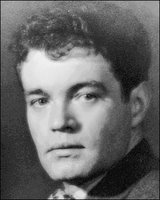
Crevel, René (1900-1935)
French Dada and Surrealist poet

Gassed himself the day before the Congress of
Writers for the Defense of Culture met in Paris.


Czigány, Dezsö (1883-1937)
Hungarian painter

Committed suicide in a psychotic fit, but
not before killing his family.


Daswanth (active ca. 1560; d 1584)
Indian miniature painter

Stabbed himself with a dagger.

Dayes, Edward (1763-1804)
English painter, draftsman and printmaker


Domínguez, Oscar (1906-1957)
Spanish painter and sculptor
Doort, Abraham van der (1575/80-1640)
Dutch wax-modeler, drawing-master and
administrator

Left this world despondent over the thought
that he might have misplaced one of
Charles I's favorite miniatures.

Erhard, Johann Chirstoph
(1795-1822)
German painter and printmaker

Fagan, Robert (1761-1816)
English painter, archaeologist and dealer

Jumped out of a window in Rome.

Frank, Jean-Michel (1895-1941)
French designer

Leapt to his death in New York City after having
been there for one week. Purely coincidental.

Fries, Ernst (1801-1833)
German draftsman, painter and lithographer

Slit his wrist.

Gagneraux, Bénigne (1756-1795)
French painter and engraver

"Fell" out of a window in Florence.
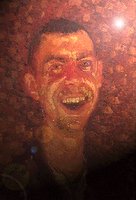
Gerstl, Richard (1883-1908)
Austrian painter and draftsman

Disemboweled himself with a butcher knife
after a brief romantic fling with the wife
of the composer, Arnold Schoenberg.


Gertler, Mark (1891-1939)
English painter

Tightly sealed up a room and turned on
the gas ring.

Gorky, Arshile (1904-1948)
American painter

His studio had burned, his wife had left him,
his health was bad and he had no money -
so he hung himself.
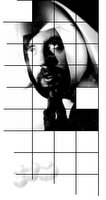
Greco, Alberto (1915-1965)
Argentine painter, sculptor and performance artist

Overdosed on barbiturates, and left notes
about how it felt (for as long as he could,
anyway).


Gros, Baron Jean-Antoine
(1771-1835)
French painter

Drowned himself in the Seine

Haydon, Benjamin Robert
(1786-1846)
English painter, teacher and writer

Shot himself, then cut his throat.

Hébuterne, Jeanne (1898-1920)
French painter

Pregnant with their second child, she leapt from
a third-story window two days after her partner,
Amedeo Modigliani, died of tuberculosis.

Johnson, Ray (1927-1995)
American painter, collagist, "mail" and
performance artist

Committed "Rayocide" one Friday the 13th
by jumping off a Sag Harbor bridge and
backstroking away.

Kahlo, Frida (1907-1954)
Mexican painter

We're fairly certain she overdosed on painkillers,
though the coroner's report read, "pulmonary
embolism."


Kirchner, Ernst Ludwig (1880-1838)
German painter, printmaker and sculptor

Shot himself after the combination of illness
and the termination of his career by the National
Socialist Party proved too much.
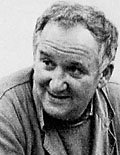
Kricke, Norbert (1922-1984)
German sculptor


Kruyder, Herman (1881-1935)
Dutch painter and draftsman

Committed suicide in a psychiatric hospital.

Kurzweil, Max (1867-1916)
Austrian painter and printmaker

On leave from being a war artist in Istria, he
did it in Vienna.

Lefèvre, Robert-Jacques-François (1755-1830)
French painter

Lehmbruck, Wilhelm (1881-1919)
German sculptor, painter and printmaker

Lemoyne, François (1688-1737)
French painter and draftsman

Lo Savio, Francesco (1935-1963)
Italian painter and sculptor
Lombardi, Mark (1951-2000)
American draftsman

Hung himself in his Williamsburg, New York
studio.

Malaval, Robert (1937-1980)
French painter and sculptor

Shot himself in the head.

Maurer, Alfred (1868-1932)
American painter

Hung himself in the doorway of his father's
bedroom.

Mayakovsky, Vladimir (1893-1930)
Russian poet, playwright and artist

Shot himself.

Mayer, Constance (1775-1821)
French painter

Cut her throat with the razor of painter
Pierre-Paul Prud'hon, who'd been her teacher
and then her lover but was not, apparently,
going to be her husband.

Min Yŏng-hwan (1861-1905)
Korean calligrapher and painter

Was so strongly opposed to living under the
1905 Protection Treaty being enforced
by Japan, that he decided not to.

Minton, John (1917-1957)
English painter and illustrator

Took an overdose of Tuinal.

Nero (AD 37-68)
Roman art patron and, yes, emperor

Decided stabbing himself in the neck was
preferable to being flogged to death.
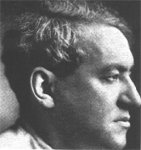
Pascin, Jules (1885-1930)
American painter, draftsman and printmaker

Pascin succeeded financially but was mentally unstable.
Amidst growing appreciation for his "elegant little obscenities" (George Grosz), on the eve of a one-man show in a prestigious Paris gallery in 1930, Pascin, distraught over his stormy affair with Lucy Krohg, he committed suicide by slashing his wrists and then hanging himself.

Pellizza da Volpedo, Giuseppe (1868-1907)
Italian painter

Hung himself after the deaths of his
wife and son.

Réquichot, Bernard (1929-1961)
French painter, collagist and writer

Robert, Louis-Léopold (1794-1835)
Swiss painter

Killed himself in Venice, in front of his easel, on
the 10th anniversary of his brother's suicide.
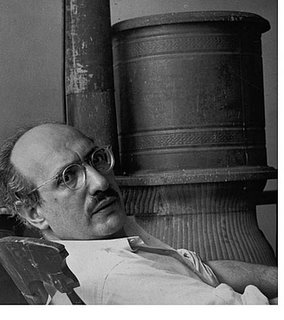

Rothko, Mark (1903-1970)
American painter

Slit his wrists in his New York studio.


National Gallery of Art in Washington
has a wonderful on-line slide presentation on
Rothko's work.

Loacted here at:
http://www.nga.gov/feature/rothko/


Sage, Kay (1898-1963)
American painter and poet

"I have built an ivory tower of despair...
I scream, I scream...
In my ivory tower."

-- Kay Sage, 1957


Seymour, Robert (1800-1836)
English printmaker and painter

Shot himself in the garden at his home in
Islington.
Soares dos Reis, António (1847-1889)
Portuguese sculptor, engraver and teacher

Soroka, Grigory (1823-1864)
Russian painter and draftsman

Staël, Nicolas de (1914-1955)
French painter

Jumped out of his studio window in Antibes.

Stauffer-Bern, Karl (1857-1891)
Swiss printmaker, painter, sculptor and poet

Tilson, Henry (?1659-1695)
English painter and draftsman

Shot himself through the heart with a pistol over
the unrequited love of a wealthy patroness.
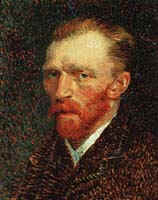
van Gogh, Vincent (1853-1890)
Dutch painter

Died, two days afterwards, of a self-inflicted
gunshot wound to the chest.


Vaughan, Keith (1912-1977)
English painter

Chose to overdose, rather than live with bowel
cancer, kidney disease and depression.

Watanabe Kazan (1793-1841)
Japanese painter

Committed an honorable suicide after a run in
with the Tokugawa shogunate (over its
isolationist policies) led to his being under house
arrest.


Witkiewicz, Stanislaw Ignacy (1895-1939)
Polish writer, art theorist, painter and photographer

When the Second Army invaded Poland, he tied
himself to his lover, fed her poison and slit his
wrists. She regained consciousness. Him - no.
Witte, Emanuel de (1617-1693)
Dutch painter

Said to have drowned himself, after his body
was discovered in a frozen canal.

Wood, Christopher (1901-1930)
English painter

Stepped in front of a train.
Xue Ji (AD 649-713)
Chinese calligrapher and scholar-official

Forced to commit suicide after somehow
becoming embroiled in a plot to poison
the new emperor.


Keywords: artist suicide,

Edited byPaul Grant - web site Paul-grant.com


Tuesday, January 17, 2006


Found ths unusual Site dedicated to Dying pictures and suicide letters:

what they are not...

First off, I should say what we are NOT about. We do not condone or support suicides of any kind and we are NOT a suicide hotline. There are NO certified councelors or psychiatrists associated with this site or any dying pictures site. This is a website for a suicide documentary. There are places on this site to anonymously submit suicide letters and thoughts and, if you wish, to let your feeling on the topic of death and suicide be heard publicly as well.

why?

For most of us, myself included, the idea of taking your own life has crossed our minds at some point. Some people want to stop their pain. Others want to do it to create pain for someone else. There are as many reasons people do it as there are different kinds of people. The outcome is the purest entity in the universe - Death. And just like Death, we do not and will not discriminate anyone. Male, female, black, white, asian, 10 years old, or 110 years old; this site and all its pages are for anyone who wants to view, post, discuss or submit.

Express...
Death is the end of all of us. On this page is any kind of art inspired by death or despair or dying. You're only limited by your own imagination here. You can submit anything: painings, drawings, photos, sketches, macaroni art... whatever. You can send it in anonymously if you like to my P.O. Box or electronically. Remember, you won't be censored so don't restrict yourself. Check back soon for updates...

The site is at: Dyingpictures.com

Photo Walls


Ernie Kovacs chopping off Milt's mother's head
From The Magic Castle in Los Angeles


National Public Radio has an interesting story today on Photo walls:

The father-daughter radio team of Mal and Jennifer Sharpe continue their exploration of what they call photo walls -- collections of snapshots of regular customers, both famous and not, often found at small businesses, restaurants and clubs.

I know in the restaurants where I have worked we always had these type of walls. In one restaurant, the bar was lined with the famous jazz artist who had played at the Restaurant-club twenty or more years in the past. When toured through these photo's you got a jazz history lesson, and also got a lot of gossip about the `regular' people who were posing with the stars.


You can listen to Mal and Jennifer on their latest foray the photo wall at The Magic Castle in Los Angeles, a venerable club for conjurers and slight-of-hand artists in the Hollywood Hills.

Other spots they have visited can be viewed on the second link below:

http://www.npr.org/templates/story/story.php?Storied=5160554&ft=1&f=1008

http://sharpeworld.com/photowalls/


Keywords: Photo walls, Ernie Kovacs, The Magic Castle

Story edited for post by Paul Grant

Klimt paintings that Nazis stole

Adele Bloch-Bauer I

US woman wins fight for Austrian art

Klimt paintings that Nazis stole valued at $150m

By George Jahn, Associated Press | January 17, 2006

VIENNA -- It was a seven-year legal struggle with dazzling stakes -- five precious paintings by Austrian icon Gustav Klimt that a California woman says were stolen from her Jewish family by the Nazis.

Now, a court ruling made public yesterday will probably resolve the high-profile case against Austria's government in her favor.

The Austrian arbitration court determined the country is legally obligated to give the paintings to Maria Altmann, the heir of the family who owned them before the Nazis took over Austria in 1938, the Austria Press Agency reported.

Altmann said she was awakened by a telephone call from her attorney at 7:30 a.m. yesterday with the good news.

''I tell you, frankly, I had a very good feeling the last few days. I had a very positive feeling thinking things will go all right," said Altmann, reached by telephone at her home in Los Angeles. ''I'm thrilled that it came to this end."

Though the court's ruling is nonbinding, both parties have previously said they will abide by it, and Austria's government is expected to give up the works of art that have been displayed for decades in Vienna's ornate Belvedere castle.

That would represent the costliest concession since Austria began returning valuable art objects looted by the Nazis. The pictures have been estimated to be worth at least $150 million.

But for lovers of Klimt, at least one of the disputed paintings -- the oil and gold-encrusted portrait ''Adele Bloch-Bauer I" -- is priceless. Altmann, 89, is the niece of Bloch-Bauer, who died in 1925. The subject's family commissioned her famous portrait and owned it, along with the four other Klimt paintings disputed in the case.

Jane Kallir, co-director of New York City's Galerie St. Etienne, which introduced Klimt to the United States in 1959, calls the 1907 portrait ''literally priceless." Stylistically similar to Klimt's world-renowned ''The Kiss," the painting is replicated on T-shirts, cups, and other souvenirs.

Austria considers the paintings part of its national heritage. Klimt was a founder of the Vienna Secession art movement that for many became synonymous with Jugendstil, the German and central European version of Art Nouveau.

Bloch-Bauer represented the cream of Viennese society -- a Jugendstil ''Mona Lisa" with her shock of black hair, full lips, strong hands, and expressive brown eyes set against Klimt's gold and gilt framework. As early as 1908, a Vienna art critic described it as the portrait of ''an idol in a golden shrine."

Lawyer E. Randol Schoenberg, who represents Altmann, said the court's decision fulfilled all her hopes and expectations."

''It will make Mrs. Altmann . . . very happy," he told the Austria Press Agency.

The case stemmed from a 1998 Austrian law that required federal museums to review their holdings for any works seized by the Nazis and determine whether they were obtained without remuneration.

A formal announcement of the court decision, and Austrian government reaction, were expected today.

Lawyers for the two sides have fought since 1998 over rights to the famed portrait and four other paintings -- a lesser-known Bloch-Bauer portrait as well as ''Apfelbaum" (''Apple Tree"), ''Buchenwald/Birkenwald (''Beech Forest/Birch Forest), and ''Haeuser in Unterach am Attersee" (Houses in Unterach on Attersee Lake").

The two sides began mediation in March, following a US Supreme Court decision that Altmann, a retired Beverly Hills clothing boutique operator, could sue the Austrian government.

After Bloch-Bauer died, the five pictures remained in her family's possession. Her husband fled to Switzerland after the Nazis took over Austria. The pictures were then taken by the Nazis and the Austrian Gallery was made the formal owner.

Attorneys for Austria have argued Altmann's aunt intended to give the works to the gallery.

© Copyright 2005 The New York Times Company

Keywords: Gustav Klimt, Altman, Austria, Nazi stolen art, Bloch-Bauer, Jugendstil, E. Randol Schoenberg, Belvedere castle

Sunday, January 15, 2006

New Self Portrait of Paul Grant


Keywords: Paul Grant, Paul-Grant.com, http://thebluerider.blogspot.com/

Saturday, January 14, 2006

paul's poster:


Keywords: Artist Paul Grant, Volunteering

Tuesday, January 10, 2006

What does volunteerism look like?


Put it on a poster. Any size, any medium, any form.


View the flyer here


The inaugural International Youth Volunteerism Summit is a weekend conference to celebrate the impulses behind youth volunteerism around the world. At the same time, it will create a social and intellectual space for serious critical discussion of the limits and pitfalls of those impulses as well as extending our understanding of what “volunteerism” really. Art shows and documentary screenings will push our understanding of what it means to be productively engaged abroad. Delegates and speakers from all parts of the world will participate in this 4-day summit, held on February 23-26, 2006 at Northwestern University.

Poster entries will be displayed on this site for voting.
The winning entry will be featured on publicity materials sent around the world. The best entries will be displayed as part of an exhibition at the Summit.

All Entries must be received by January 15th by…

Wednesday, January 04, 2006

Artist binds feet in desert and looses key- Hops back to civilization with his art work

Note this is not his picture. Just added it to give a visual to the story,

Pauls thoughts- Good press, but no follow up- no where to see the art- no pics of him or his work able to be found on the web. the value of this little publicity may have staying power in his own town, but it had incredible potential on a larger scale.

An artist who chained his legs together to draw a picture of the image hopped 12 hours through the desert after realizing he lost the key and couldn't unlock the restraints, authorities said Wednesday.

Trevor Corneliusien, 26, tightly wrapped and locked a long, thick chain around his bare ankles Tuesday while camping in an abandoned mine shaft about five miles north of Baker, San Bernardino County sheriff's Deputy Ryan Ford said.

"It took him over 12 hours because he had to hop through boulders and sand," Ford said. "He did put on his shoes before hopping."

The artist, who is from the area, often sketched images inside mines in the Southwest. He had finished his drawing Tuesday when he realized he didn't have the key.

Corneliusien finally made it to a gas station and called the sheriff's department, which sent paramedics and deputies with bolt cutters. His legs were bruised but he was otherwise in good health, Ford said.

The artist did not have a listed phone number and could not be reached for comment.

And the drawing?

"He brought it down with him," Ford said. "It was a pretty good depiction of how a chain would look wrapped around your legs."


Keywords:
Trevor Corneliusien, San Bernardino County, Paul Grant on Art

Sunday, December 18, 2005


New work:
Acrobat boys
pastel and pencil


Keywords: Artsist Paul Grant, Acrobat boys

'Audacious' theft of two-ton sculpture leaves art world reeling


Paul's comment: The police think this elaborite theft might be for the scrap value of this piece, is that because they don't see it's aestetic value being worth as much? For Moore (the artist) this was a change from curves to points, and for some that alone adds to it's value.

From an artist point of view this theft made me wonder: If an artist works for a long time on a piece of art and it turns into something that is not beautiful, don't they sometimes have to withold thier own judgement and think of the time invested and the fact that the piece has a `historic' ( read noval) value? Would he (Moore) have had the integrity and strength to destroy a piece that lacked inate beauty at it's completion? ( Do I?)

The theft gives this piece an added celebrity now, a sign about the theft might be placed on a neat stand beside the work after it's recovered. The reader might then ask themselves why would anyone want to steal this? Maybe for the scrap value? Or maybe the viewer might think: 'It must be valuable `art' if anyone would take all those pains to steal it.'


Big loss: Moore's bronze Reclining Figure is valued at £3 million.
Photograph: Hertfordshire Constabulary/ PA

'Audacious' theft of two-ton sculpture leaves art world reeling

ARTHUR MACMILLAN

NICKING a painting off the wall of a sleepy country gallery is one thing. Making off with an 11ft-long, two-ton bronze sculpture worth £3m is quite another.

In the biggest art heist in Britain for more than two years, thieves wearing hoodies and baseball caps have stolen one of the renowned British sculptor Henry Moore's most valuable works from an English country estate using a crane and open-back lorry.

In the completely unchallenged theft, the bronze, Reclining Figure, disappeared from a courtyard at the late artist's home in Much Hadham, Hertfordshire, on Thursday.
Police investigators believe the giant bronze may have been stolen for its scrap value. But art industry experts last night suggested the famous sculpture could have been stolen to order.

Dick Ellis, a former Scotland Yard detective and UK expert on art theft, said: "This sculpture has been taken because the grounds were open and it was easily available. The theft has been thought through and well planned but scrap would not be a good earner for the thieves. Henry Moore is a desirable artist and a highly saleable one. There is bound to be a bigger return for the thieves from an illegal buyer."

Gerald Laing, the Scottish-based sculptor and artist, said: "They must have taken it for a client. They are not hard to get at because Moore believed that his work should be openly exhibited. I suspect it will be in a box and heading abroad within days."

The theft from the open courtyard was captured on CCTV but police yesterday revealed only sketchy details, revealing that a red Mercedes flatbed lorry, fitted with a crane on the back, and an old-style Mini Cooper, had been used in the audacious operation.

The team apparently circumvented locked gates and an alarm system, while the sculpture was in the process of being moved to another location. One thief was described as wearing a hooded jacket and another a baseball cap.

Chief Inspector Richard Harbon said police classed the statue as a "national treasure" and a team of detectives was now working on a number of theories behind the theft. Work included liaison with the Met's Fine Arts Squad and Hertfordshire's own specialists.

He added: "It is a nationally-renowned sculpture and very, very difficult to get rid of. So, obviously, we are looking at all the possibilities, as I said, right from scrap metal right up to fine arts theft.

"This is not opportunist theft. These are people who knew what they were doing, knew what they were after. A very, very audacious theft."

A substantial reward has been offered by the Henry Moore Foundation for information leading to the statue's recovery.

Moore, who died aged 88 in 1986, crafted the sculpture in 1969 and 1970.

Gareth Spence, a spokesman for the Henry Moore Foundation, said it was the first such crime at the foundation, where there were gates, alarms, and a keyholder permanently present. "We don't imagine this type of thing happening. A combination of the gates and the location would seem to negate them [sculptures] being lifted out of the grounds and stolen. It is quite a daring thing to do, and it will cause a reassessment of our security process."

Spence said the statue represented a development into pointed shapes for the artist and was "an important piece", famous throughout the world.

"It is very representative of Moore. You automatically think of Moore's legacy. I think it would be very hard for anyone to sell. The recipient - where would they display it? It is meant to be displayed outside," he said.

Considered by many to be the most outstanding British sculptor of the century, Henry Moore was born the seventh of eight children, in the coalmining town of Castleford, Yorkshire in 1898. He began carving in wood and modelling clay at school and, after serving in the Great War, became the first ever student of sculpture at Leeds School of Art in September 1919 before winning a scholarship to London.

In 1992 Moore's collection of 666 sculptures, 3,000 drawings and 8,000 prints was valued at £130m

Saturday, December 10, 2005

The big bang theory of art

Opinion - Ben Macintyre

The Times December 02, 2005


If we think poets and painters have better sex lives, it may be that they are good at persuading us.


“SEX AND ART are the same thing,” declared Pablo Picasso; this was one of the greatest chat-up lines ever, from a master of the art.

Finally, a scientific survey has proven what everyone has long suspected (which is what scientific surveys ought to do): creative artists, it appears, really do have more exotic love lives than the rest of the population. The new study, published this week in Proceedings of the Royal Society, suggests that artists, from poets to painters to puppeteers, have, on average, twice as many sexual partners as non-artists.

Promiscuous Picasso, Lord Byron the philanderer, Dylan Thomas the boozy womaniser: these were not simply bonking Bohemians, it seems, but artists doing what their genes told them to do. According to the researchers the greater the artistic endeavour, the larger the sexual appetites. (There are some obvious exceptions to this rule: Julio Iglesias once boasted that he had had sex with 3,000 women, but has never yet sung a decent song.)

The authors of the study, also suggest a link between artistic sexuality and schizophrenia. The genes linked to schizophrenia appear to be particularly common among poets and artists: the illness may contribute to artistic individuality and a uniquely imagined view of the world, but it may also explain the attractiveness of artists to others, and thus why those traits have been passed on.


Indeed, artistic ability may have evolved as a form of mating display, a courtship technique to attract partners. In his 2001 book The Mating Mind, Geoffrey Miller argued that intellectual and artistic ability were a form of human plumage, designed to entice sexual partners. “Come up and see my etchings” may be a central statement in human evolution.

Artists have more sex, of course, because that is what they are expected to do. As rule breakers, they are assumed to act on impulse, unconstrained by the mores that apply to the rest of society. When Lucian Freud (83) is discovered to be stepping out with yet another nubile lovely, even strait-laced Middle England bottles its outrage, accepting this side-effect of genius.

Artists (Freud excepted) also tend to die young, making it imperative that they gather ye rosebuds while they may. Poets, in fact, die younger than any other sort of artist, and younger than almost any other type of professional, including deep-sea divers.
When Andrew Marvell wrote To his Coy Mistress, he was speaking for all artists who sense Time’s wingéd chariot hurrying near, and want to get laid, a lot, before it runs them over:

Had we but world enough, and time,
This coyness, Lady, were no crime.

Artists are not only expected to have sex more, but also to write, paint, sing, compose and talk about it, endlessly, preferably in smoky bars. For Picasso, sex was a prevailing theme: a recent exhibition in Paris, Picasso Erotique, displayed no less than 330 paintings, drawings, engravings and sculptures portraying sexual congress, or what Gertrude Stein called Picasso’s “dirty side”. Picasso was genuinely interested in sex, all his life, but most modern artists feel obliged to include sex in their portfolios, as a matter of form. Tracey Emin’s installation Everybody I’ve Ever Slept With: 1963-1995 is a very good joke, but also a wry reflection on the modern artist who is obliged either to celebrate sex or to fake it. The Bad Sex awards, presented annually to the most embarrassing description of the sexual act, is never short of contenders.

Artists may not actually have wilder sex lives than mere mortals; they may simply be better at misrepresenting what they do in bed. Jerry Seinfeld once remarked: “Everyone lies about sex. People lie during sex. If it weren’t for lies, there’d be no sex.”

And artists, being imaginative types, can lie better than anyone else. On the other hand, it is de rigueur for a great artist to claim that sex is boring (“The biggest nothing” — Andy Warhol), thus implying that they are at it like rabbits.

D.H Lawrence

“Nothing nauseates me more than promiscuous sex in and out of season,” wrote D. H. Lawrence, simultaneously yawning and panting, to Lady Ottoline Morrell.

The portrait of the artist as a young stud-muffin may have some scientific basis, but it is also a long-running conceit, based largely on wishful thinking. As the artist Dinos Chapman pointed out this week: “The truth is that artists aren’t that special. People just like to think so — especially artists.” But the legend of the artistic and literary libido refuses to die, perhaps because for many people sex has become so desperately cheapened and unromantic.

On the day the sex lives of the artists was unveiled, another, much grimmer report appeared under the less than enticing title Who Pays for Sex? Based on a survey by the Medical Research Council, this showed that the number of men paying for sex has doubled over the last decade, with nearly one in ten of all males admitting that he had done so during the previous five years. The rise of sex tourism, access to sex via the internet, migrant sex workers and rising divorce rates have all contributed to a massive growth in commercial sex. London alone now has an estimated 4,000 massage parlours and escort services. Pornography remains the single most heavily researched subject on the web.

The general devaluation of sex surely explains why, more than ever, we need to associate sex with art, glamour and the carefree misbehaviour of a Picasso or, for that matter, a Kate Moss.
Lord Byron

Three weeks after Byron died in 1824, The Times declared him “the most remarkable Englishman of his generation”; this, it should be remembered, was an Englishman who had rogered practically anything with a pulse, including boys, various grandes dames and his own half-sister. He was mad, bad and dangerous to know; and, as an artist, he was fêted for it.

The image of the artist as Don Juan, glamorous and faintly unhinged, with a tangled and athletic love life, owes more to myth than science, but it is one of the oldest and most cherished of our cultural stories. This may be no more than escapism; but so is art.


Keywords: SEX AND ART , Pablo Picasso, Lord Byron, Julio Iglesias, Dylan Thomas sexual appetites,. The Mating Mind, Geoffrey Miller, Lucian Freud Andrew Marvellbut world enough, and time,. Tracey Emin, Andy Warhol, D.H Lawrence, Lady Ottoline Morrell, Dinos Chapman, Kate Moss, Don Juan, Paul Grant,

Sunday, December 04, 2005

'Lewd rubbing' shuts Paris statue


Is this strange or what?


Pere Lachaise cemetery in Paris has fenced off a famous tomb to prevent lewd acts being performed on a statue.

The effigy of 19th Century journalist known as Victor Noir has long been popular with women visitors.

This is partly due to his reputation as a romantic figure, and partly because of the effigy's design.

Officials concerned about damage to the icon's groin area have erected a fence around the grave, and a sign prohibiting indecent rubbing.

Noir - whose real name was Yvan Salman - was killed by Pierre Bonaparte, a great-nephew of the Emperor Napoleon, after bearing him a challenge to a duel.

According to the story, he was due to get married the day after he was killed.

The statue shows Noir in a frock coat and trousers lying flat on his back, with a distinct enlargement in the groin.

The effigy has been held as an aid to love or fertility.

It is said that a woman who kisses the lips of the prostrate statue and slips a flower into the upturned top hat will find a husband by the end of the year.

The new sign warns: "Any damage caused by graffiti or indecent rubbing will be prosecuted."

Story from BBC NEWS:
http://news.bbc.co.uk/go/pr/fr/-/2/hi/europe/3975607.stm
 
*/ /* Use this with templates/template-twocol.html */